The kitchen is where the seasons meet the wider world. Here we cook with what’s fresh, what’s familiar, and what sparks curiosity — from our takes on international dishes to the breads and baked goods that anchor a home. This is a space for thoughtful cooking, slow rituals, and meals that carry the stories of where we’ve been and where we’re going.
How We Cook
Our kitchen is shaped by two different instincts that meet at the same table. Rick cooks the way some people breathe—intuitively, confidently, without ever needing to read a recipe. He can turn whatever is in front of him into something deeply delicious, guided by memory, curiosity, and a kind of quiet alchemy.
I (Jon) tend to move more slowly, leaning into the rhythms of baking and the meditative work of fresh pasta. There’s something grounding about flour on the counter, dough under my hands, and the simple repetition of shaping, folding, rolling. We use only Italian 00 and semolina flours—wheat grown and milled with care, without the chemical processing so common in the U.S. It’s a small choice, but one that feels aligned with how we want to nourish ourselves.
We try to cook with intention, paying attention to where our ingredients come from and how they’re grown. We follow the Dirty Dozen and Clean Fifteen lists religiously, choosing organic when it matters most and celebrating the foods that shine in their natural state. Whenever we travel, we seek out farmers markets—not just for the produce, but for the glimpse they offer into a place’s daily life. There’s a kind of truth in a market stall: the season, the soil, the people who tend it.
And at home, nothing feels more grounding than the Saturday farmers market at the Ferry Building in San Francisco. It’s become a ritual for us—wandering the stalls, tasting what’s new, letting the colors and scents shape the meals we’ll make in the week ahead. It’s a reminder that cooking isn’t just about technique or ingredients; it’s about connection, seasonality, and the quiet joy of choosing what feels right for the moment we’re in.
This is the heart of our kitchen: intuitive cooking, mindful sourcing, and the simple pleasure of making food that feels honest and alive.
Christmas Eve Cooking
Christmas Eve always brings its own kind of rhythm. The house feels different that night — quieter, softer, full of the small rituals that make winter feel like winter. This year, my sister Holly and I leaned into something new: the idea of building our own traditions, shaped by the places and people we come from.
We spent the afternoon feeding Italian 00 flour, water, and a little olive oil into a pasta machine — a true experiment for both of us. Instead of rolling sheets by hand, the machine mixed the dough and pushed it through a die, extruding long ribbons of fresh fettuccine. There was something wonderfully old‑world about it, watching simple ingredients transform under steady pressure into something familiar and comforting. Working side by side, taking turns with the machine, laughing when the first strands came out uneven — it all felt like the beginning of a new tradition.
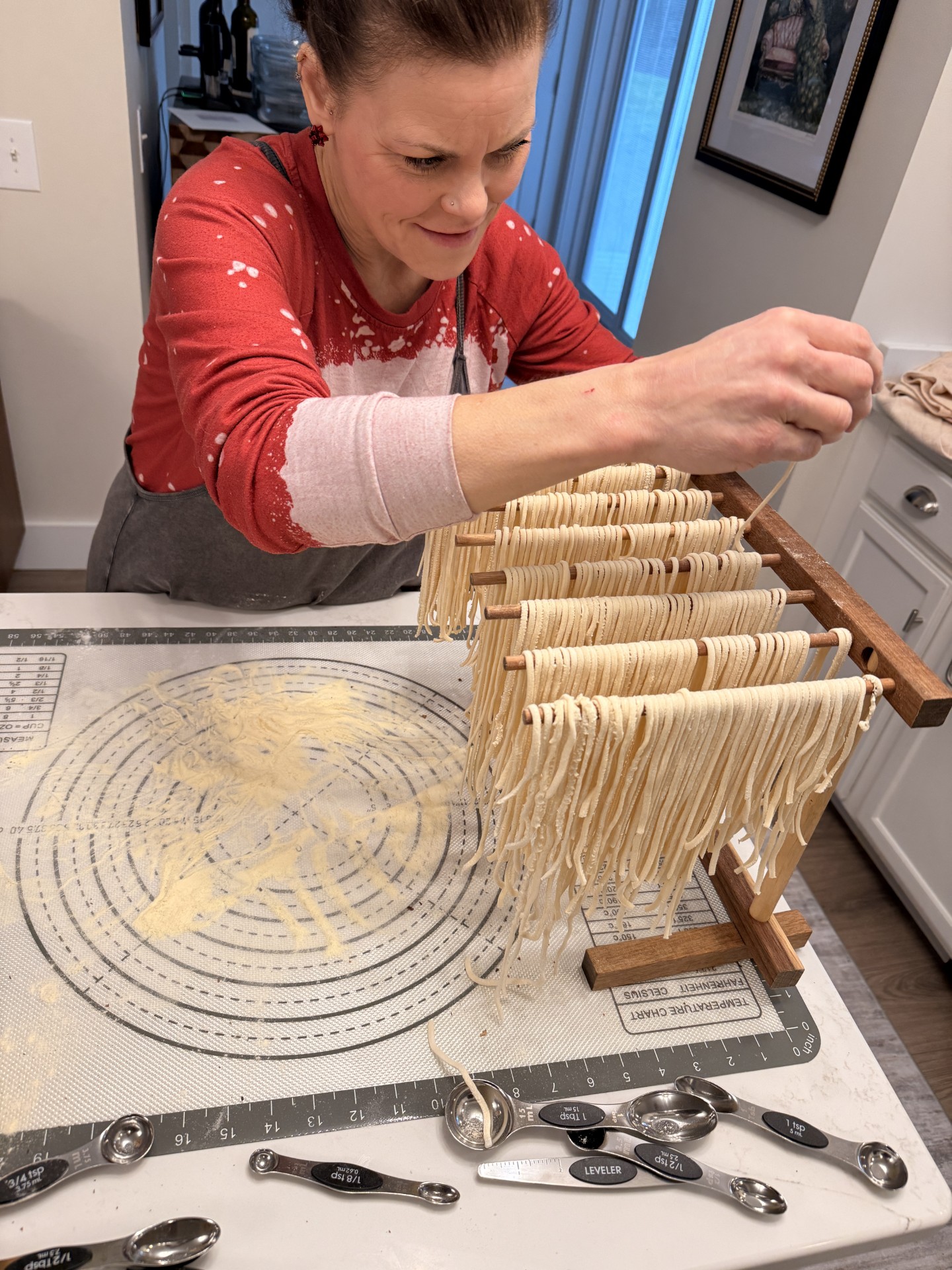
After we worked on the pasta, Holly took charge of the sauce. She started with an organic jar from Aldi — simple, clean, a good base — and transformed it the way she always does, adding depth and warmth until it tasted like something that had been simmering all day. It ended up being the perfect match for the pasta: bright, rich, and comforting in that unmistakable Christmas‑Eve way.
Meanwhile, Rick was in full holiday mode — pulling out the big guns for the main meal. He roasted a turkey and a ham and filled the kitchen with every side you could imagine. By the time everything was ready, thirteen of us were gathered around our dining table, plates full, the house warm and loud in the best possible way. It was the kind of feast that reminds you why people come home for the holidays.
This year was also about experimenting — trying on new traditions to see what might stay with us. Holly made several versions of traditional holiday cookies, each one a small nod to the flavors we grew up with and the ones we’re still discovering. She baked nut horns, mini lady licks, and even a batch of buckeyes made with protein powder — her way of keeping things a little lighter without losing the spirit of the season. And together, we leaned more intentionally into our Italian and Scottish ancestry. Rick and I even have pillows on our bed that say “Merry Christmas” in Gaelic and Italian — a small, quiet reminder of the roots that shape our home.
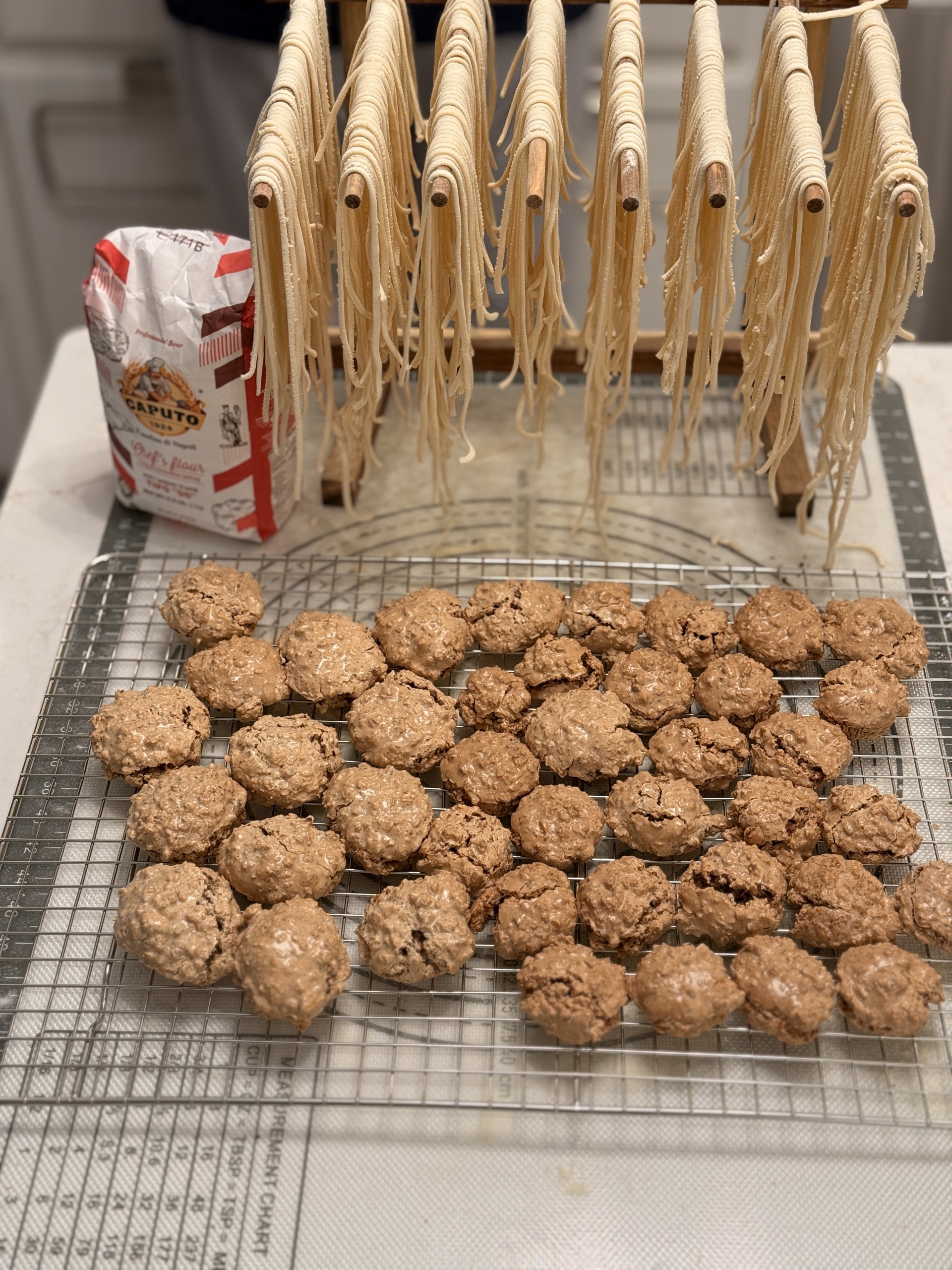
We also made a batch of Brutti ma Buoni, the wonderfully rustic Italian cookies whose name means “ugly but good.” I found a recipe online and couldn’t resist adding a few warming spices — cinnamon, clove, a hint of nutmeg — just enough to make them feel like winter. They came out cracked and imperfect, exactly as they should be, and the kitchen smelled like toasted nuts and spice for the rest of the night.
Recipe coming soon.
There’s something about cooking on Christmas Eve that feels like a bridge — between years, between places, between the people we’ve been and the people we’re becoming. It’s simple work, but it carries memory. And in the quiet of winter, that’s enough.
New Year’s Day Pasta & Bannock
New Year’s Day has a different kind of quiet. After the celebration the night before, the morning felt slow and a little foggy — the kind of start where you move gently, letting the new year settle in around you. And then we opened the curtains and saw it: nearly a foot of snow had fallen overnight, blanketing everything in white and turning the world into something still and bright.
Before anything else could happen in the kitchen, I bundled up and headed outside to clear the driveway. The snowblower carved clean paths through the drifts while the cold air woke me up in a way coffee never could. It felt like a small ritual of its own — clearing the way, making space for the day to begin.
Inside, my sister Holly had already started on the Scottish bannock bread, using a recipe she found online. It was delicious — rustic, hearty, and exactly the kind of bread that belongs to winter. She made it twice, experimenting with the technique, and confirmed that if you press it down too firmly you could probably use it as a discus. But even then, the flavor and texture were wonderful. It felt like a nod to the Scottish side of our heritage, simple and satisfying in the way only old recipes can be.
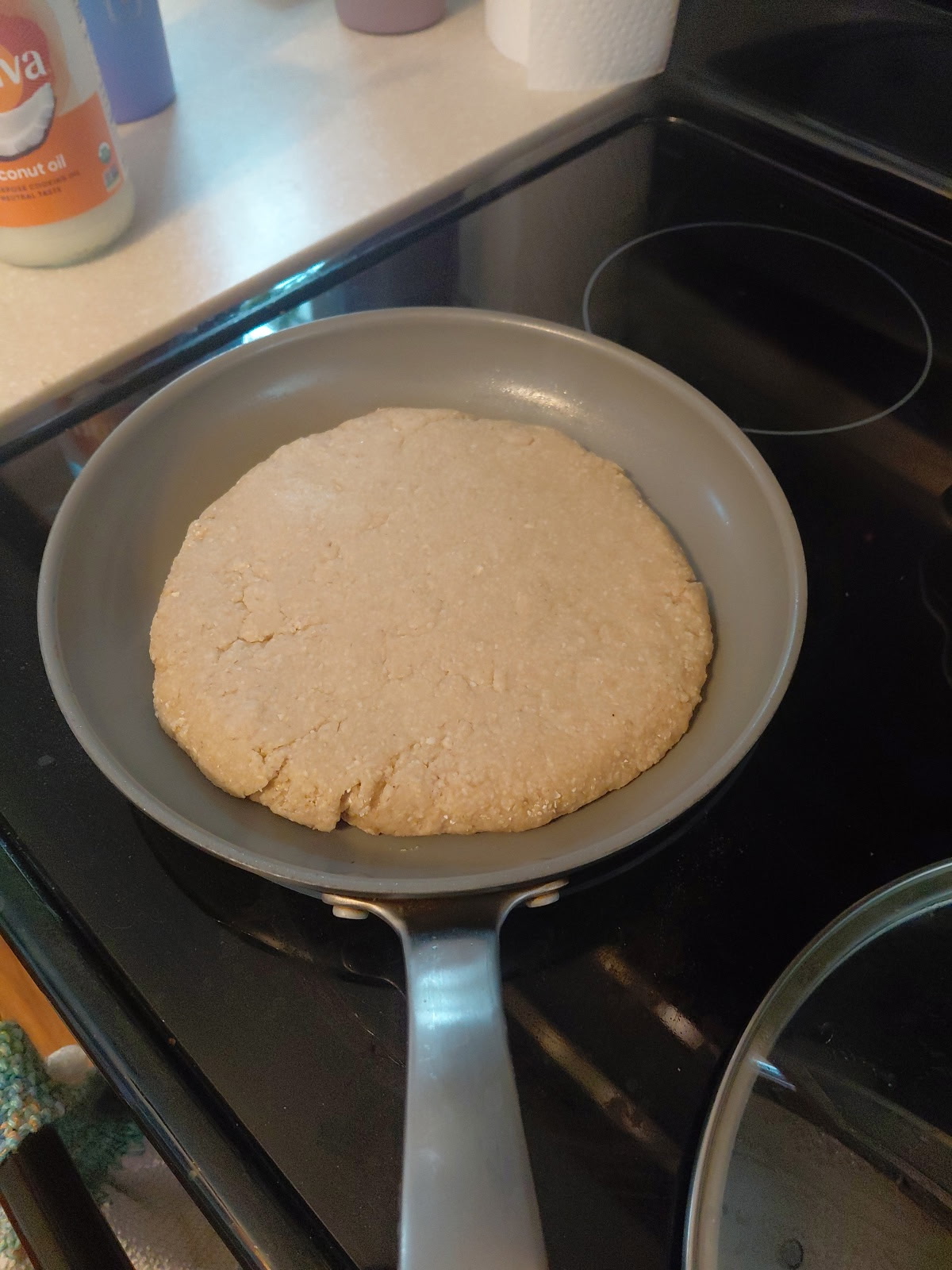
You can find the bannock recipe we used right here on Gemma's Bigger Bolder Baking .
Once the driveway was clear, I turned to the pasta. I developed a recipe for egg dough that we made completely by hand: about 400 grams of flour formed into a well, four eggs cracked into the center, a drizzle of extra‑virgin olive oil, and just enough water to bring it all together. It was the kind of tactile, grounding work that makes you slow down — kneading until the dough turned smooth and elastic, then letting it rest before rolling it out.
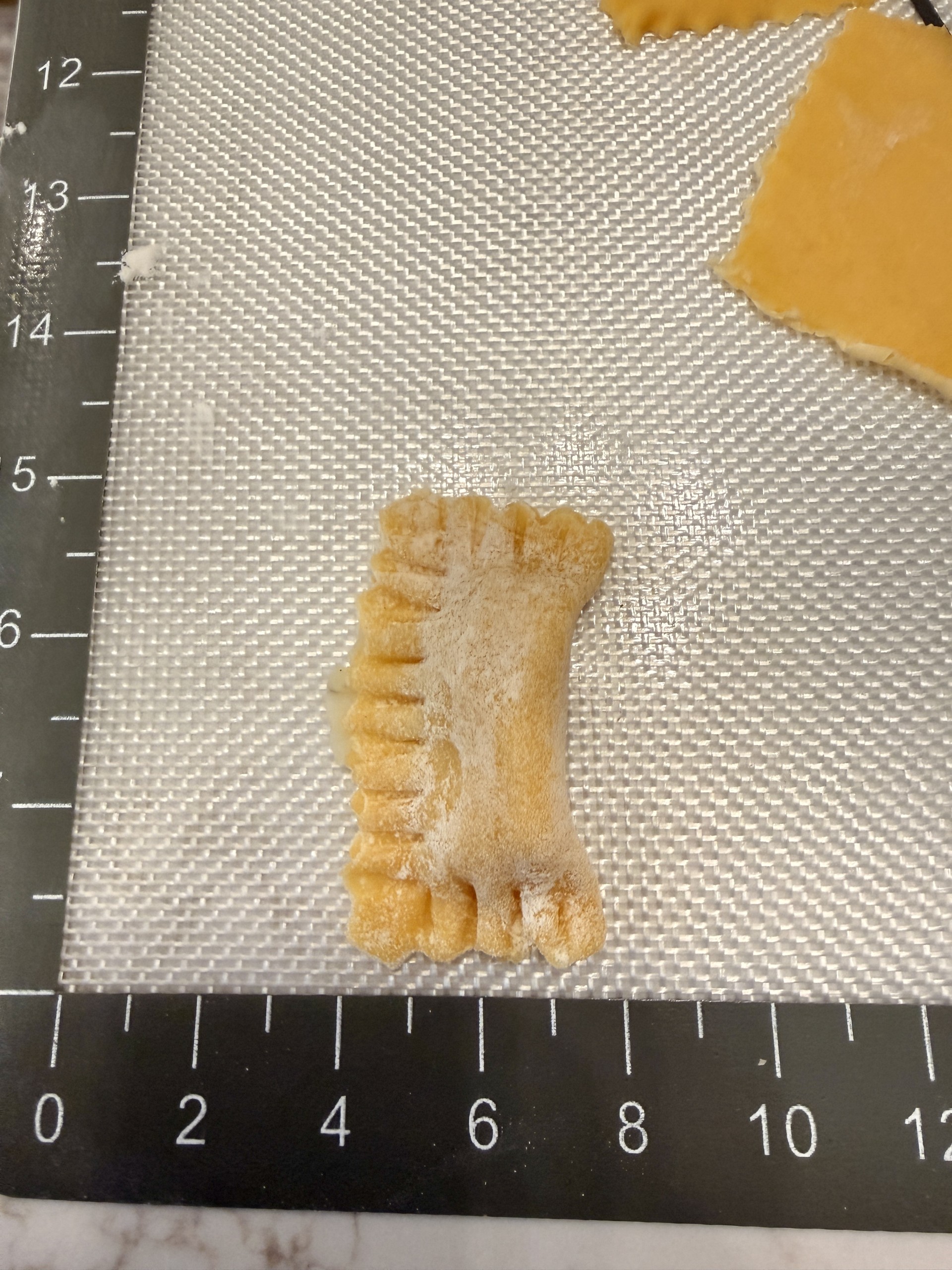
We wanted to make homemade Agnolotti so used the pasta‑roller attachment on my KitchenAid to create thin, see‑through sheets of golden dough. Once they were ready, we cut them into neat 2.5‑inch squares. From there, everything was done by hand. We made two fillings using organic ingredients: one with potato and cheese, the other with sauerkraut and mushrooms. Each square was folded over into a small rectangle, edges crimped with a fork — imperfect, handmade, and exactly right.
We made two sauces to go with them: a bright red sauce similar to the one we used for Christmas Eve, and a brown‑butter sauce infused with sage, rosemary, and thyme. The kitchen smelled warm and herbal, like the start of something new.
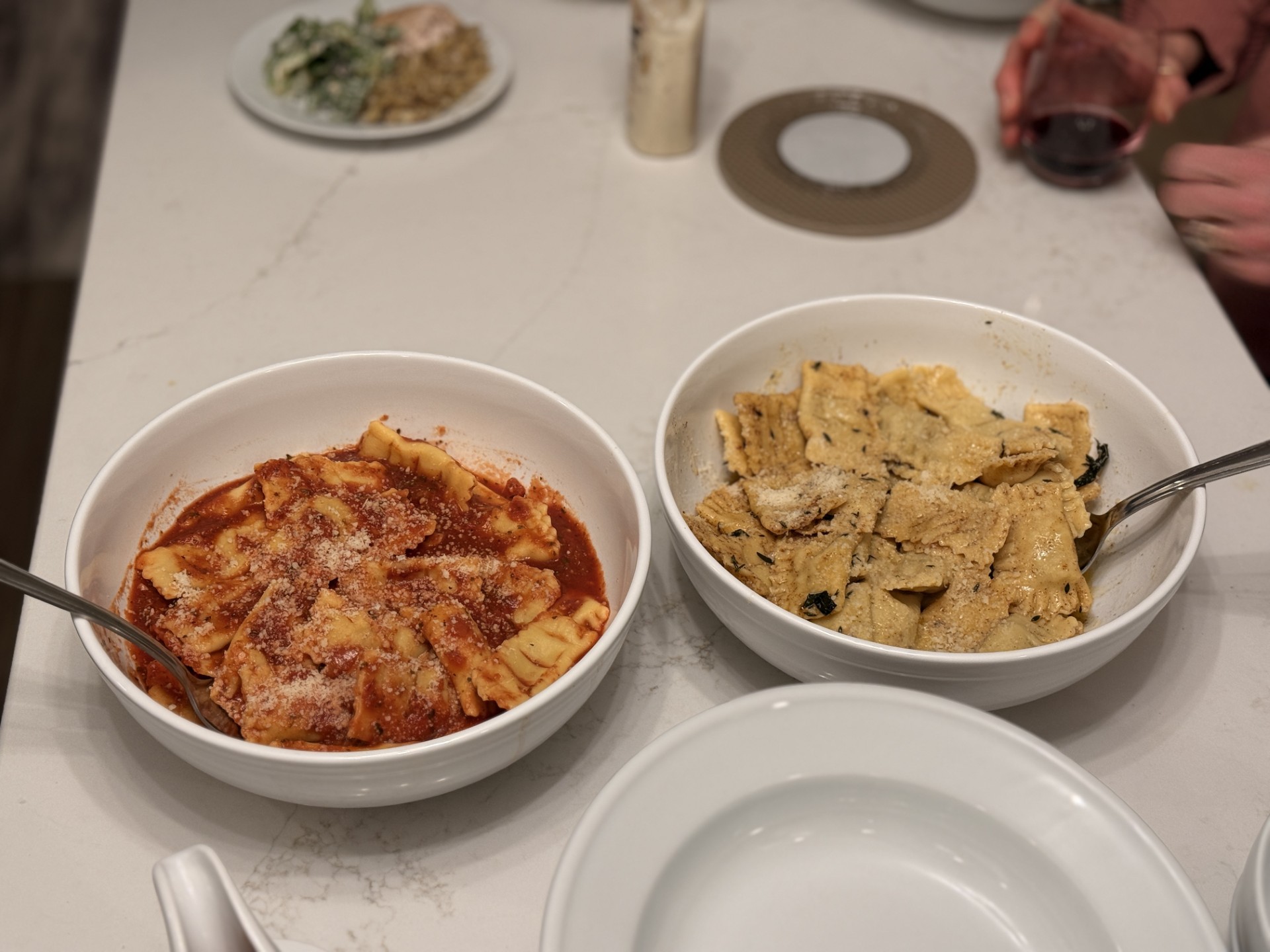
Rick rounded out the meal with a Caesar salad made completely from scratch — crisp, sharp, and exactly what the richness of the pasta needed. And just like that, we found ourselves with a thoroughly Italian‑and‑Scottish New Year’s Day meal, a blend of the places we come from and the traditions we’re choosing to build.
There was something special about making everything by hand — the bannock, the pasta, the fillings, the sauces. It felt like a ritual, a way of stepping into the new year with intention, craft, and a sense of who we are. Maybe this is the beginning of a new family tradition. It certainly felt like one.