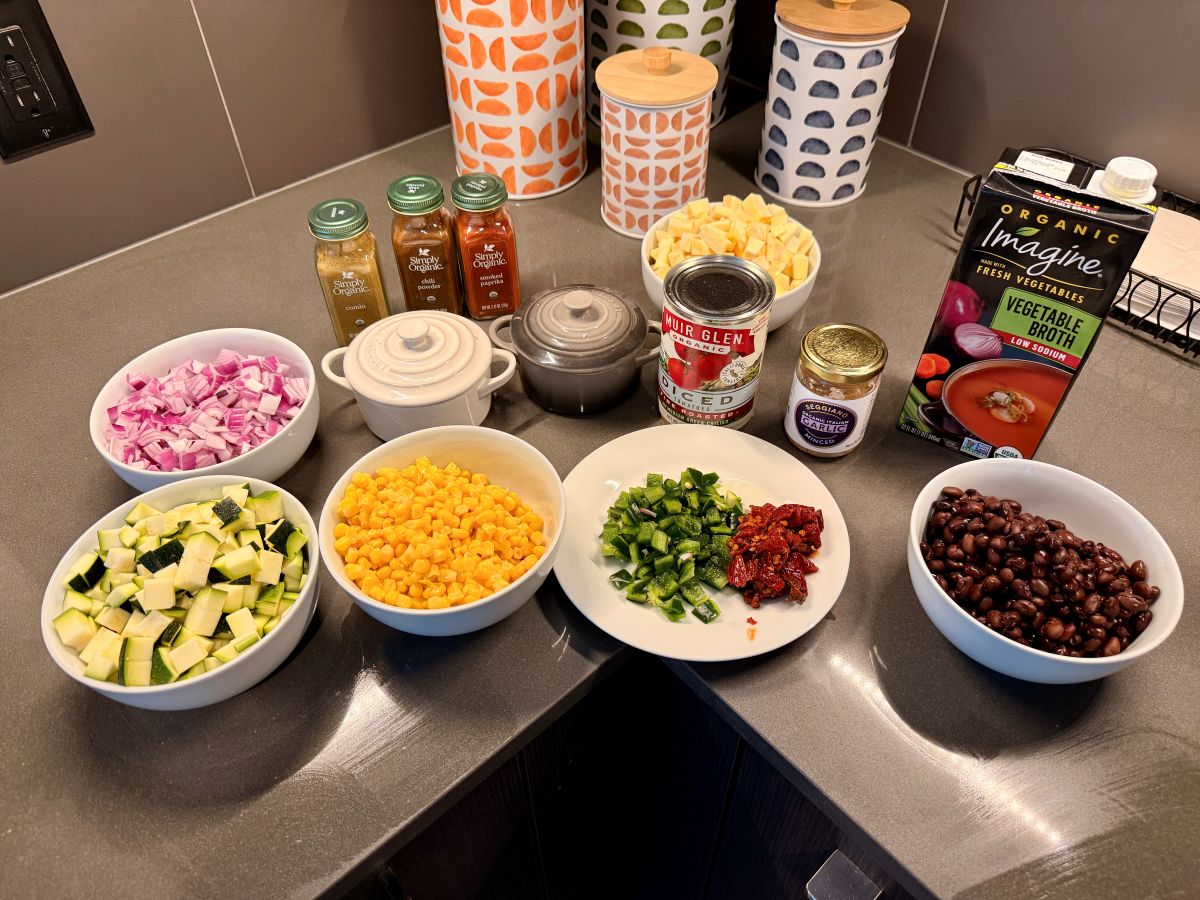
We have all stood before it: the open refrigerator at 5:00 PM, illuminated by the cold hum of indecision. It’s the moment where the "forgotten" items begin to call out—a few stray parsnips that have lost their snap, a lone zucchini, and that half-empty jar of chipotles in adobo lurking in the back of the shelf.
The easy choice is to let them go another day until they are beyond saving. But part of intentional living in the kitchen is learning to see these ingredients not as a chore, but as a blank canvas. This particular bisque didn't start as a planned entry in our menu; it began as a desperate attempt to honor what we already had.
From Google Search to Intuition
It started with a frantic search: "What can I possibly do with parsnips, zucchini, and black beans?" The results were mostly uninspired stews or basic roasted medleys. They lacked the "oomph" we were craving. So, we decided to close the laptop and lean into the rhythm of the kitchen.
We began by building a foundation of aromatics, but as the onions softened, the spirit of "spreading our wings" took over. Why not lean into the smoke? Why not bridge the earthy sweetness of the roots with the smoldering heat of the Southwest?
The Alchemy of Spices
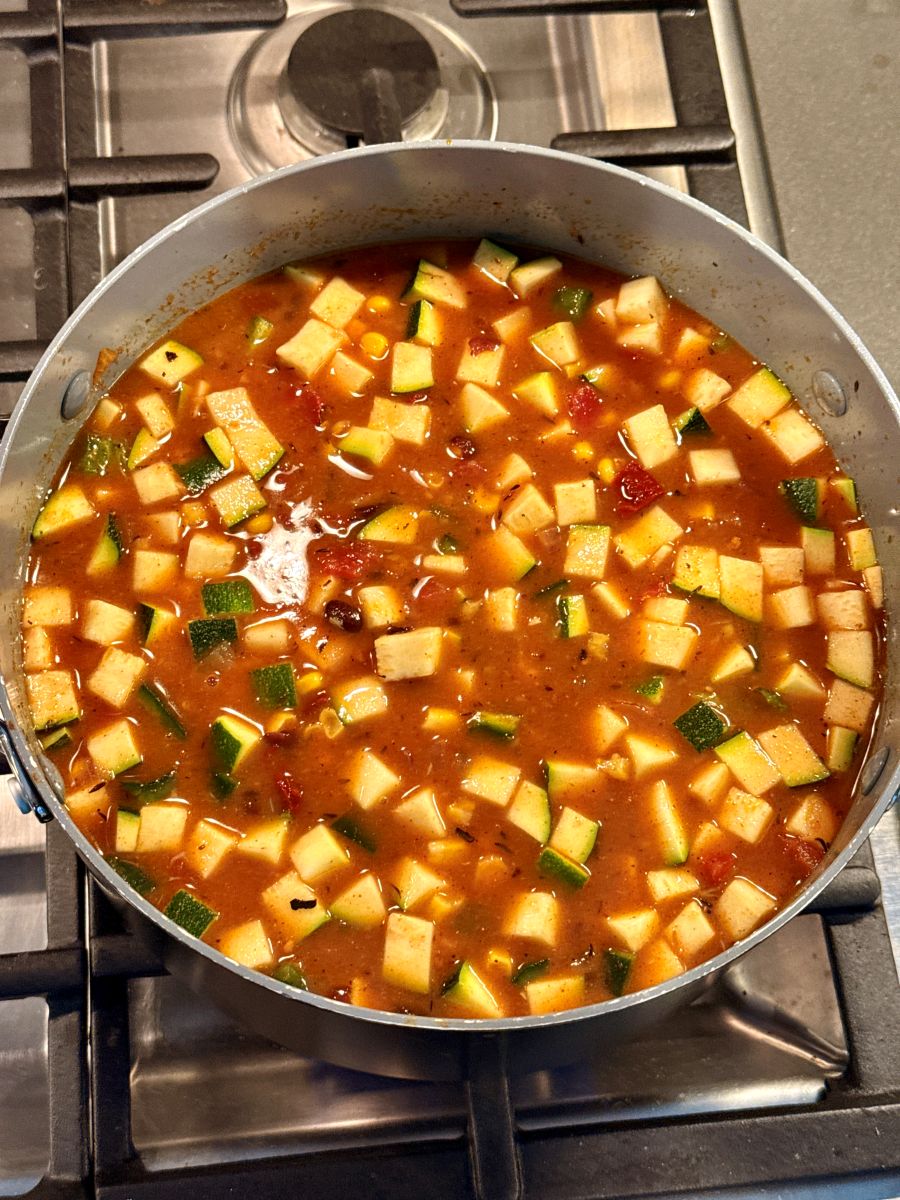
The transformation happened in the spice cabinet. A bold hand of smoked paprika met a secret, stabilizing dash of cinnamon. As the spices "bloomed" in the hot oil, the aroma in the kitchen shifted from "fridge clearing" to "culinary study."
The real magic, however, was a textural experiment. We wanted a bisque—something velvety and substantial—but we wanted to avoid a heavy dairy base. By mashing a portion of the black beans into a thick paste and stirring them back in, the broth transformed. It gained a luxurious body that defied its humble, plant-based origins.
Transcendence through Patience
This dish, born on a whim, reminded us that some of the best culinary moments can't be rushed.
While it tasted incredible straight from the pot, it reached a state of transcendence after forty-eight hours in the refrigerator.
you do not need to let it rest that long, but we recommend at least 24 hours for the flavors to come together.
That rest allowed the sharp edges of the chipotle to soften and the parsnips to fully infuse the broth with their sweetness.
It is worth noting that while peppers like chipotle can lend smokiness to a dish, one should be cognizant of the capsaicin and the level of heat they can provide.
As is true with most peppers, the heat comes from the seeds. So if you are heat averse, please ensure that all your peppers are seeded before you cut them up and put them in to this recipe.
Also, be aware that when you purchase a can of chipotles in adobo sauce from the store, not only are the peppers likely to contain seeds, but the adobo sauce is likely to have concentrated that capsaicin and can amplify the heat factor.
Therefore, if you want more heat, keep the seeds and add the adobo sauce. You can always add honey as a Hail Mary to bring the spice level down if you tip too far into the heat.
The result was a dish with incredible depth of flavor and a rich, smoky aroma that now holds a permanent place in our rotation. It is a reminder that when we stop following the rulebook and start listening to the ingredients, the kitchen provides exactly what we need.
Found some parsnips in your crisper drawer?
Check out the recipe: Smoky Adobo & Root Vegetable Bisque →