There are a million ways to dress a salad. Some are elaborate, some are clever, and some seem determined to turn a bowl of greens into a project. Ours is decidedly not a project.
We wanted a house vinaigrette—something we could make without opening a recipe, something dependable enough to become muscle memory, and something good enough that a simple salad never felt like an afterthought. Over time, the dressing became less a recipe than a small piece of kitchen rhythm: olive oil, apple cider vinegar, Dijon mustard, a little seasoning, a good shake, and dinner can move on.
That may sound almost too ordinary to write about. But ordinary things are often where a home finds its character. The meals we make repeatedly, the tools we reach for without thinking, the formulas we know by heart—those are the things that quietly shape how a kitchen feels.
A Formula Worth Knowing by Heart
A classic vinaigrette is wonderfully forgiving. The proportions can move with the ingredients and with the meal. Ours settles into a familiar balance of extra virgin olive oil, apple cider vinegar, and sharp Dijon mustard. The mustard gives the dressing body and helps bring the oil and vinegar together; the vinegar supplies the lift; the olive oil rounds everything out.
We like that there is room inside the formula. A salad of tender greens might want something brighter. Bitter leaves can take a little more richness. A few herbs, cracked pepper, or another small adjustment can change the character without changing the underlying rhythm.
The point is not to make the dressing identical every time. The point is to know the shape of it well enough that you can make it your own without starting from scratch.
The Shaker That Became Part of the Ritual
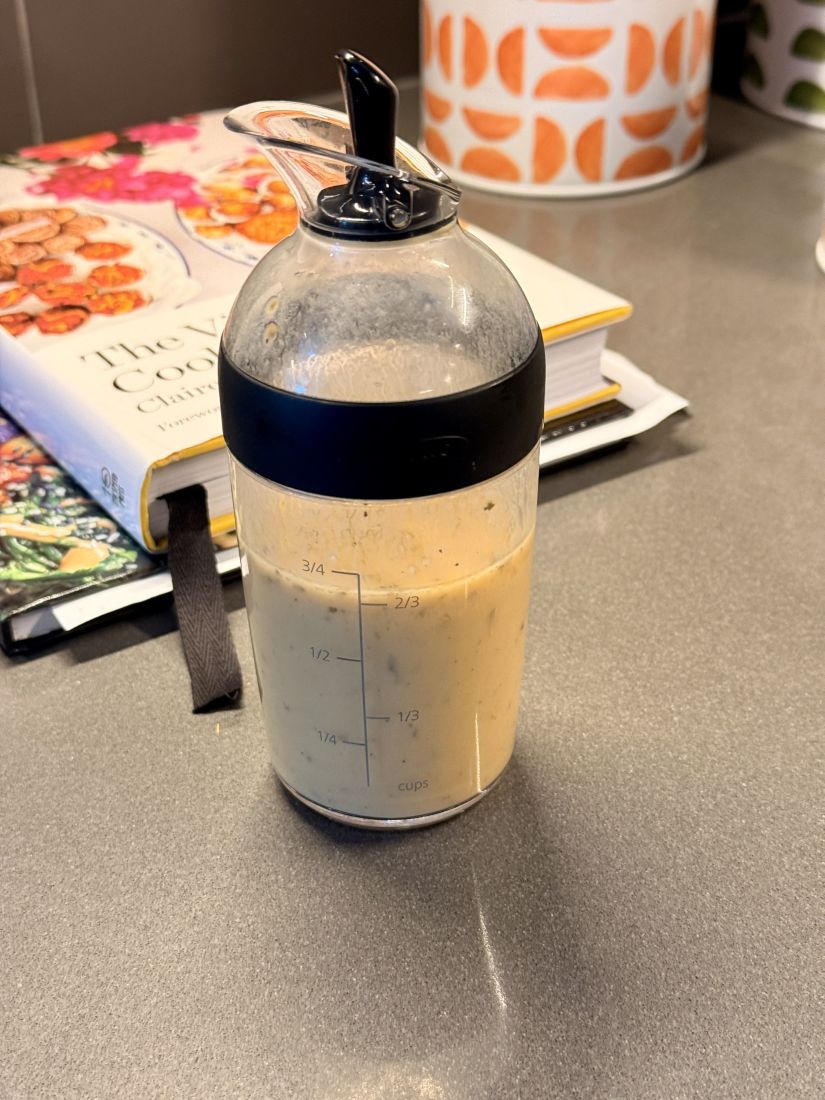
Years ago, while watching Valerie Bertinelli on the Food Network, we caught a glimpse of an OXO dressing shaker being used to make a quick vinaigrette. It was one of those small practical moments that sticks with you. We bought one for our own kitchen, and it became one of those tools that earns its place simply by being used.
There is something satisfying about pouring everything into the shaker, closing it, and giving it a proper shake. No whisk balanced over a bowl. No extra vessel to wash. No ceremony required. Just ingredients going in, a few seconds of vigorous movement, and a dressing ready to pour.
The tool is almost beside the point now. What matters is that it makes the good choice the easy choice. When something is simple enough to reach for every day, it has a way of becoming part of the architecture of a home.
Freshness Has a Short Memory
One of the things we learned from making this dressing regularly is that fresh food behaves like fresh food. We do not make a large batch and expect it to behave like a bottled dressing sitting on a supermarket shelf. We make what we expect to use, and we like it best when it is freshly mixed.
The olive oil is part of the reason. When chilled, olive oil can become cloudy or partially solidify because naturally occurring waxes and other compounds crystallize at lower temperatures. That change is normal and does not mean the oil has gone bad.
In our kitchen, though, the practical lesson is simpler: this is a dressing we like fresh. If the oil has spent time in the refrigerator and the texture has changed, let it come back toward room temperature and shake it again. If the dressing has been sitting around longer than we intended, we make another batch.
There is something appealing about that limitation. A homemade vinaigrette does not need to pretend it will last forever. It belongs to the meal it was made for.
Why the Simple Version Wins
We have tried more elaborate dressings. There is nothing wrong with them. Shallots, herbs, citrus, honey, garlic, different vinegars—there is an entire world of possibilities once you start looking.
But a house standard earns its name by being the thing you actually make.
Our vinaigrette works because it asks very little of us. It takes a handful of ingredients we already keep around. It takes a few seconds to mix. It can dress a plain bowl of greens, brighten roasted vegetables, or give a more substantial salad enough acidity to feel complete.
And because we know its basic proportions by feel, it leaves room for judgment. Maybe the vinegar is especially sharp that day. Maybe the greens need more richness. Maybe dinner has enough going on already and the dressing should simply get out of the way.
That is the kind of simplicity we mean when we talk about intentional living at Thistle & Cypress. Not stripping everything down for the sake of minimalism. Just finding the things that work, learning them well, and making room for life around them.
A Small Ritual, Repeated
There is no grand lesson hiding in a bottle of salad dressing. And maybe that is the lesson.
A home is built from repetitions. Some are important enough to announce; most are not. You make coffee. You open the windows. You water something. You put dinner on the table. You shake a vinaigrette.
Over time, these small acts become familiar enough that they stop feeling like tasks. They become part of the rhythm of the place.
Ready to make it your house standard?
Get the exact ratios and method for our House Vinaigrette →